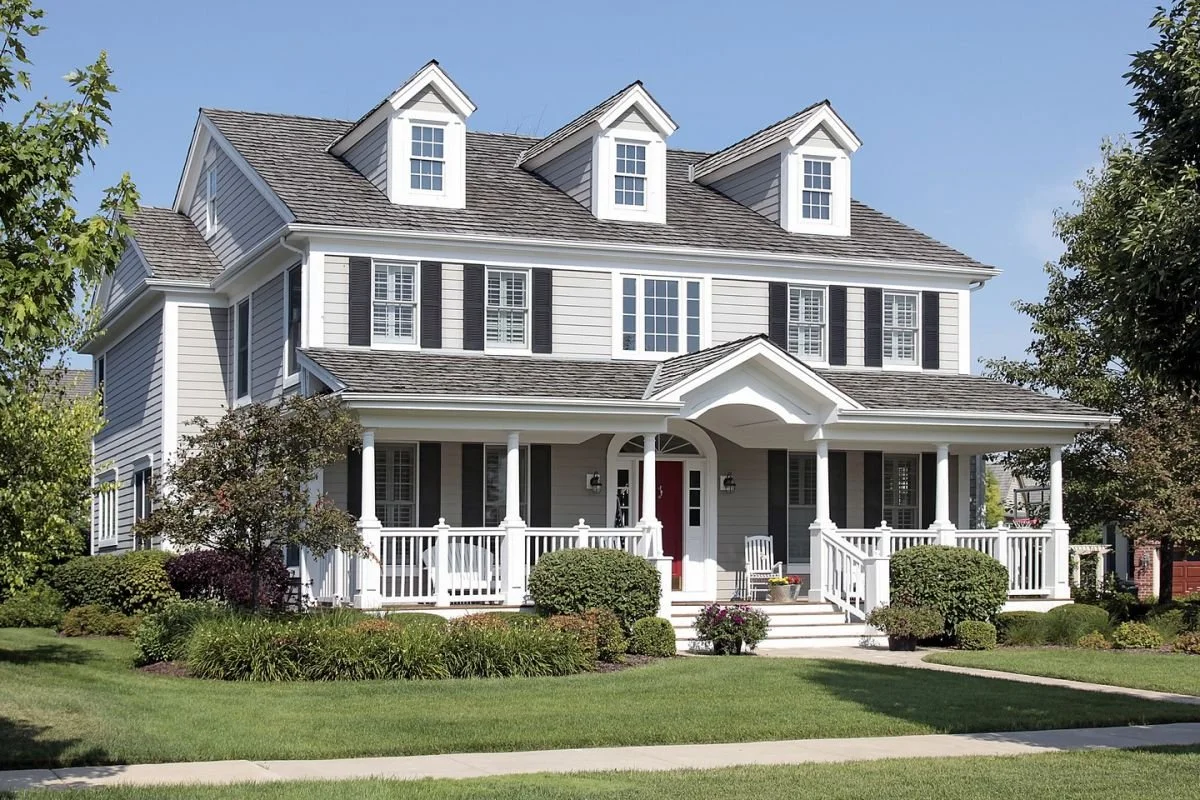
How resilient is your home?
The simplest way to own a climate resilient home is to buy one, but what if you already own a home? How do you know how vulnerable it is? How do you know what specific climate risks it may have and what you can do about them? Until recently, you just had to figure it out yourself. But now there’s a better way: a Climate Resilience Assessment.
When my family started looking for a house in 2022 I knew it needed to be resilient to climate extremes, but there was little guidance on how to find such a home. With high stakes and few options, I realized I would have to figure it out myself. Building on fundamentals from my B.S. in civil engineering, I compared topographical maps to modeled flood risk, investigated the causes of home damage, studied shifts in rainfall patterns, learned why flood risk is excluded from home insurance policies, and a lot more. In the process, I developed a framework for evaluating the climate resilience of homes, which served my family well in our search.
In a Climate Resilience Assessment, I rigorously apply this framework to help current homeowners understand their home's resilience, identify any potential vulnerabilities, and consider mitigation options.
In the climate change era your house is like a ship on stormy seas. Make sure it's fit for the voyage ahead.
A Climate Resilience Assessment is a structured approach to evaluating a home’s climate vulnerability. The process involves three steps:
The homeowner completes a detailed questionnaire
I access and aggregate the publicly available, high-quality modeled climate risk data for the address
I conduct an on-site examination of the house, lot, and surrounding area looking for signs of climate vulnerability
Saving for the future while owning a climate vulnerable home is like pouring water into a leaky bucket.
The deliverable is a report synthesizing the key information from the questionnaire, climate risk data, and on-site investigation. This report:
Highlights key findings
Identifies any potential vulnerabilities
Recommends areas for ongoing monitoring
Describes ways to potentially enhance the home’s climate resilience, including what specialists may be able to help (landscape design, gutters and downspouts, windows, basement waterproofing, etc.)
Whether to consult with a service provider is up to the homeowner.
The cost of a Climate Resilience Assessment varies based on home size, but even for larger homes I try to keep it under $1,500. If you’d like to discuss an assessment, please reach out.
Climate Resilience Assessments are a first of their kind. Because the service category is new, there’s no state or other certification for assessing the climate resilience of homes. The absence of such a certification is a sign of how far behind we are in recognizing, much less adapting to, our climate reality.
Some homeowners can and will choose to make the judgment on their own about which construction specialists to consult with. This is great and I encourage it, as I do all climate risk awareness. The Climate Resilience Assessment is for homeowners who feel protecting their largest asset is worth bringing in a practiced pair of eyes.