Home-buying has changed
Today’s combination of high prices and growing climate threats has transformed buying a home - for decades the quintessential safe investment - into a risky proposition. This doesn’t mean people shouldn’t be homeowners, it means we need a different approach to buying homes. Rising climate threats require a systematic approach to evaluating the resilience of prospective homes.
This is easier said than done.
When my family started looking for a house in 2022, I knew from the preceding several years of high-profile climate disasters that it needed to be resilient to climate impacts. But how would we be able to tell resilient homes from vulnerable ones? What resources could help guide us? What does climate resilience even look like?
Necessity being the mother of invention, I read everything I could find to teach myself to evaluate the climate resilience of homes. Building on fundamentals from my undergraduate coursework in civil engineering, I studied shifts in rainfall patterns due to climate change, read extensively about what damages homes, reviewed the history and limitations of FEMA flood maps, learned why flood risk is excluded from home insurance policies, and much more.
I worry about climate risk now so you won’t have to later.
Based on this learning, I developed a climate resilience framework that served our family well. During our search, we passed on a nice home with a small stream behind it because I worried that in an extreme rainfall event the water could rise high enough to reach the house. In the end, we made a wise choice and today enjoy the peace of mind of a climate resilient home.
This experience - recognizing that home-buyers in our newly risky housing market need more information and better guidance - is what motivated me to become a real estate agent focused on climate resilience.
Because risk used to be low, the right home and community a generation ago was one that made you feel happy and comfortable. Today, the right home should still make you feel that way, but it also needs to be resilient in the face of climate change.
A climate resilient home does two important things: it keeps your family safe, warm and dry, and it future-proofs your finances.
The inverse is also true: a climate vulnerable home risks moisture, mold, and displacement, and it jeopardizes your financial security.
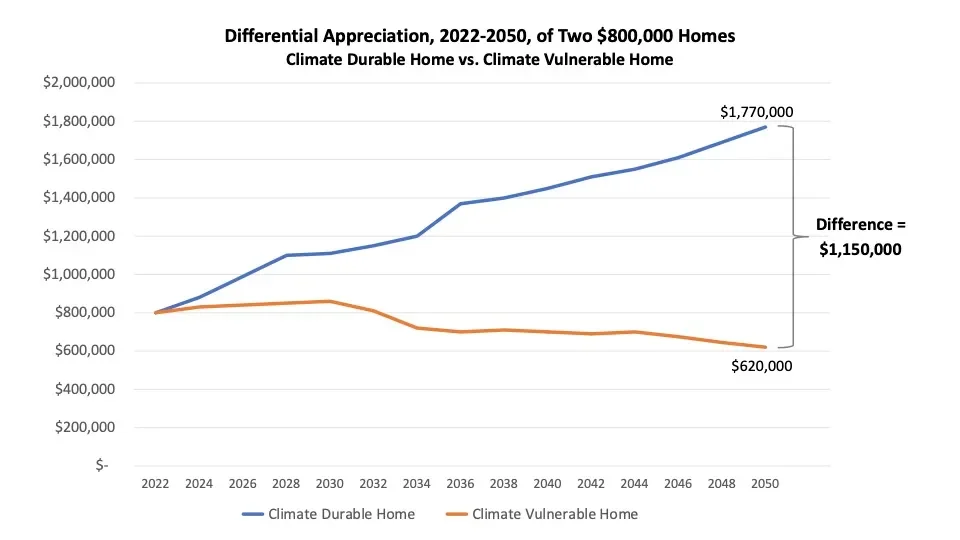
Which homes to make offers on is always the client’s decision, but a good realtor makes sure every client has the climate resilience information required to make good judgments in this high-stakes housing market.
Saving for the future while owning a climate vulnerable home is like pouring water into a leaky bucket.
I offer free consultations for anyone considering buying a home. Tap the button to reach out.
My real estate salesperson license is sponsored by Ally Realty, a progressive, independent Hudson Valley brokerage.